New Orleans Classic
Ramos Gin Fizz
Few cocktails are defined by texture as completely as the Ramos Gin Fizz. Gin, fresh lemon and lime, cream and orange flower water combine beneath a tall, soft head of foam, creating a drink that is simultaneously bright, floral, creamy and refreshing.
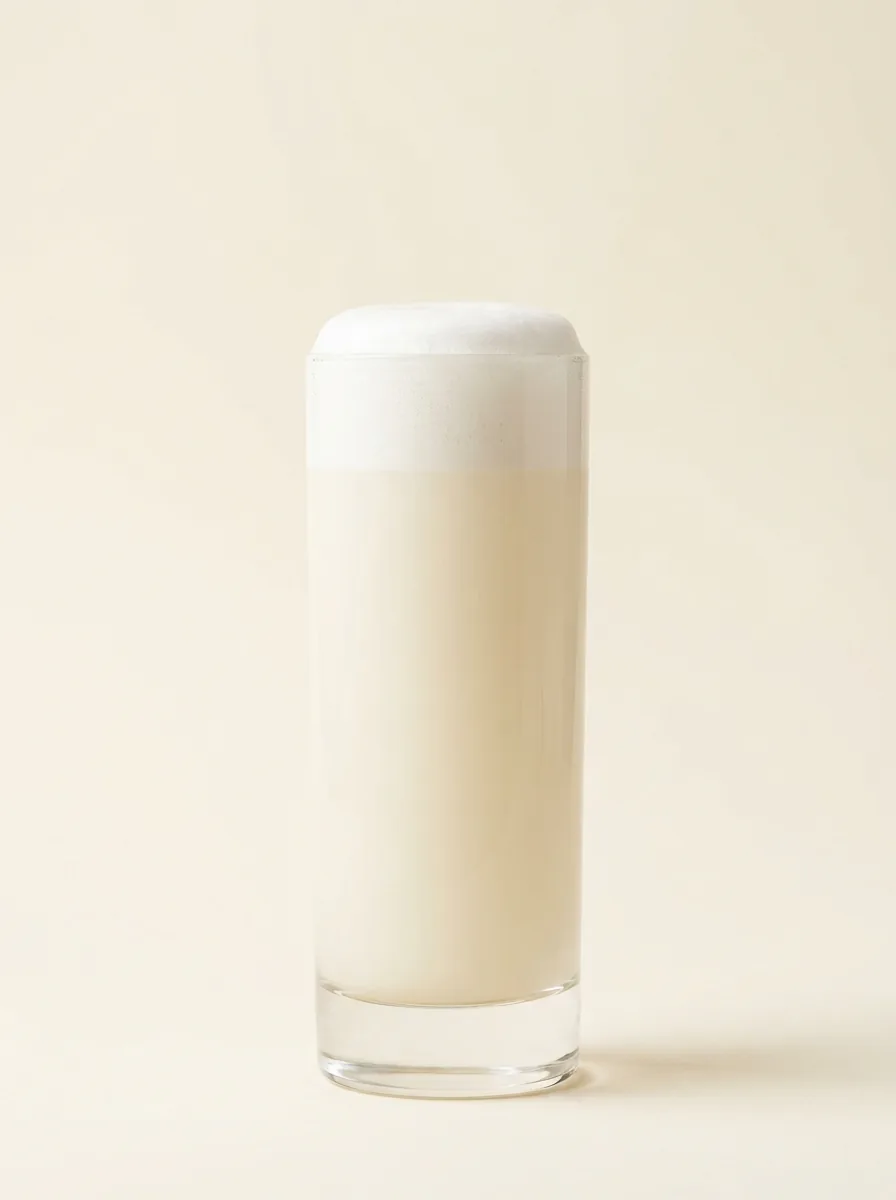
- Glass
- Highball
- Ice
- None
- Difficulty
- Advanced
- Technique
- Single shake · Fine strain · Top with soda
Ingredients
- 45 mlLondon Dry Gin
- 15 mlFresh Lime Juice
- 15 mlFresh Lemon Juice
- 30 mlSimple Syrup — 1:1
- 60 mlHeavy Cream
- 20 mlFOAMY WHITES
- 3 dashesOrange Flower Water
- 2 dropsVanilla Extract
- To topSoda Water
Method
- 01Fill a shaker with large ice cubes.
- 02Add all ingredients except soda water.
- 03Shake hard until thoroughly chilled and aerated.
- 04Fine strain into a chilled highball glass without ice.
- 05Top slowly with chilled soda water until the foam rises above the rim.
Build
- Glassware
- Highball
- Ice
- None
- Garnish
- None
- Technique
- Single shake · Fine strain · Top with soda
Tasting notes
- Floral
- Creamy
- Fresh Citrus
- Soft Effervescence
- Family
- Fizz
Origin
- Era
- 1888
- Place
- New Orleans, United States
The Ramos Gin Fizz was created in New Orleans in 1888 by Henry C. Ramos. Famous for its exceptionally long traditional shaking process and distinctive towering foam, it became one of the city's defining drinks and remains one of the most technically recognisable cocktails of the classic era.
Bartender notes
- Orange flower water is extremely concentrated. Measure carefully; too much overwhelms the gin and citrus.
- Use fresh lemon and lime juice. Their combined acidity is essential to balance both the sugar and cream.
- Keep the soda water very cold and strongly carbonated.
- Add the soda slowly so the foam lifts rather than collapsing or overflowing unevenly.
- The finished drink should be creamy but still refreshing. Excessive cream or insufficient acidity makes the cocktail heavy.
FOAMY WHITES Note
FOAMY WHITES provides the structural foam at the heart of the Ramos Gin Fizz while simplifying one of the most demanding classic egg white preparations.